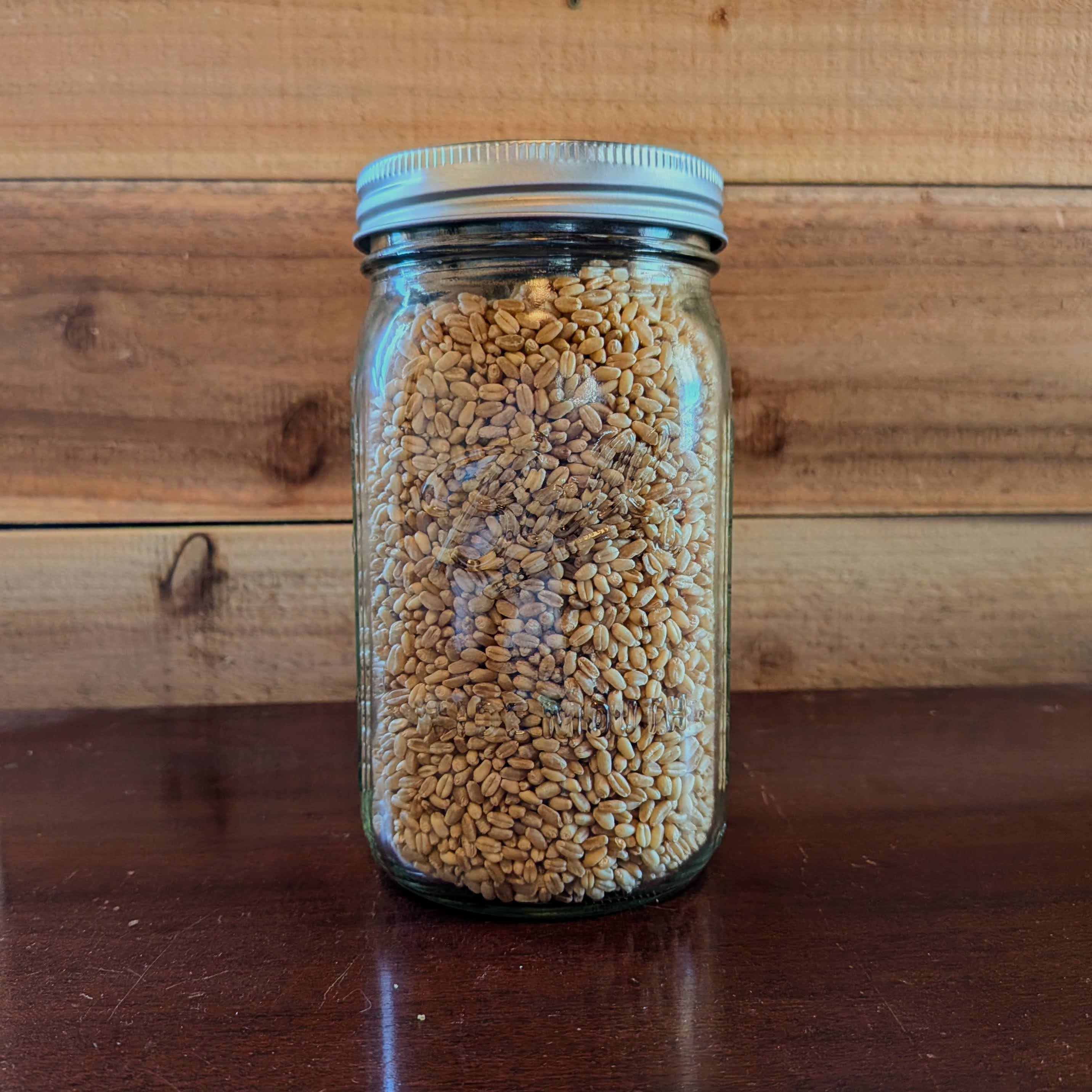
Hard and soft white wheat berries in a 32oz mason jar. Can be ground for fresh flour, cook them whole for grain bowls and soups, or sprout them in a few days on your countertop.
Hard white for bread, pizza, and pasta.
Soft white for biscuits, pastries, and pancakes.
Variety
Store cool and dry • Whole berries keep for years
Hard White vs. Soft White
Hard White
Higher protein (12–14%), which means stronger gluten development. This is what you want for bread, pizza dough, and pasta, the gluten structure is what traps gas from fermentation and lets dough rise properly. Makes a milder, lighter whole wheat bread than hard red, with a less bitter bran.
Soft White
Lower protein (8–10%), so the gluten doesn't develop as aggressively, which is exactly what you want for biscuits, pastries, muffins, pancakes, and cookies. Baked goods made with soft white come out tender instead of chewy. A direct whole wheat substitute in most pastry recipes.
Using Them Without a Grain Mill
Cook whole
Simmer in water (1:3 ratio, about 45–60 minutes) until tender and chewy. Use them in grain bowls, tossed with roasted vegetables and vinaigrette, or added to soups and stews. They hold up to long cooking where other grains fall apart.
Sprout them
Soak overnight, drain, rinse twice daily. In two to three days you have sprouted wheat with a living, active nutrient profile. Easier to digest than the dry grain, and the enzymes that develop during sprouting increase bioavailability of minerals. Eat raw in salads, or dehydrate and grind into sprouted flour.
Wheat berry porridge
Slow-cook overnight (crockpot works well) with water or milk. Comes out creamy and filling, closer to oatmeal than rice. Good with butter, honey, and cinnamon.
Add to bread dough
Soak cooked whole berries and fold them into bread dough before the final shape. Adds chewiness and texture without changing the crumb structure of the loaf.
Why Fresh-Ground Flour
Commercial flour has a shelf life because the germ, the part that holds most of the fat, B vitamins, and vitamin E, is milled out before packaging. Without it, flour keeps longer on a shelf but loses most of its nutritional value and a lot of its flavor. When you mill berries fresh, you get all three parts of the grain together: bran, germ, and endosperm, the way the plant stored it. The oils are intact, the B vitamins are there, and the flavor is noticeably different, nuttier and more complex than anything that's been sitting in a bag for months. A 32oz jar mills into enough flour for several loaves of bread.